
Hamilton Lane's *Office Space* Problem
Updating the damage to the PAF's *investor-victims*


Man with a plan
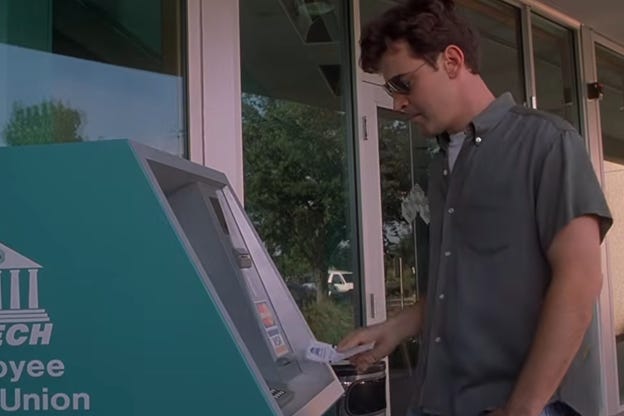
In the Mike Judge classic Office Space, three job-weary Initech workers, Peter, Michael (Bolton 😊), and Samir plot a path to riches, deploying a computer virus that shaves fractions of a cent off of their employer’s transactions, funneling the money into Peter’s Initech Employee Credit Union account.
It works, but too well: after only a few days, they end up with a far larger-than-expected balance.
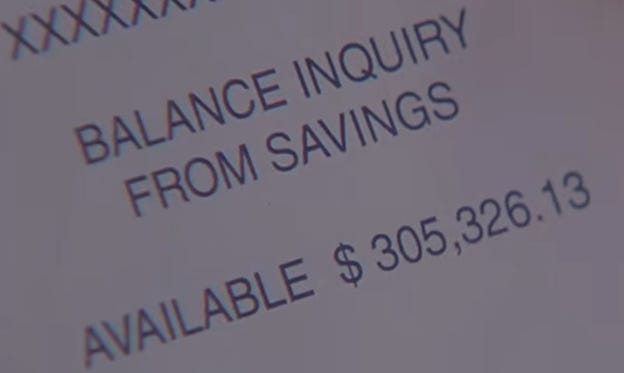
Oh Shit
Hamilton Lane’s Private Assets Fund (PAF) changes remind us of the Initech scam, except with bigger dollars, ostensible consent (seemingly not informed), and the imprimatur of regulatory review.

Corporate accounting is going to notice this
Before we head to the ATM to check Hamilton Lane’s account balance, let’s review:
Last May, Hamilton Lane, Inc. disclosed receipt of a large payment from its Private Assets Fund (PAF).

HLNE Conference Call, May 2025
The giant prize was unlocked by an investor vote. PAF investors took the advice of the PAF board:

which resulted in investors paying fees on hundreds of millions of dollars of unrealized gains, retroactive to 2020.
Last June, the WSJ’s Jason Zweig noted that until the approval, fees paid under the old arrangement had been near zero, relatively speaking, since the fund’s inception:
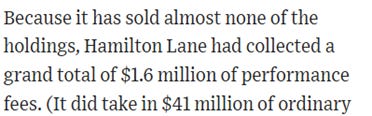
Source: WSJ
The FT reported in February inventive fees totaled an additional $33.7 million through September 2025.

A table, and a chart
The fund’s recently-filed shareholder report permits a full-year update through March of 2026. We draw your attention to the circled, large number on the lower right:

The table shows the incentive fee actually paid by year, integrating the fund’s incentive fee expense from the fund’s income statement with the change in payables from the fund’s balance sheet.
‘Incentive fee paid’ subtracts the year on year change in incentive fees payable from the incentive fee expense.
The calculations reveal familiar figures: the FY 2024 figure above, $74,231, is the same as the figure discussed in the proxy:

And Jason Zwieg’s June 2025 article mentioned the inception-to-FYE 2025 actual incentive fees paid:
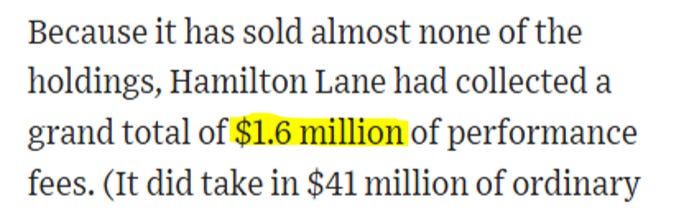
This also matches: the sum of the years 2021-2025 rounds to $1.6 million. Maths are mathing.
In an effort to become more modern, we tried to use datawrapper.de and AI to create an appropriate chart. Neither application was enthused about the use of a line chart, because the early year figures would look like zeros (and the case of the first two years of the fund, actually were zeros).
We persisted, with traditional Excel:
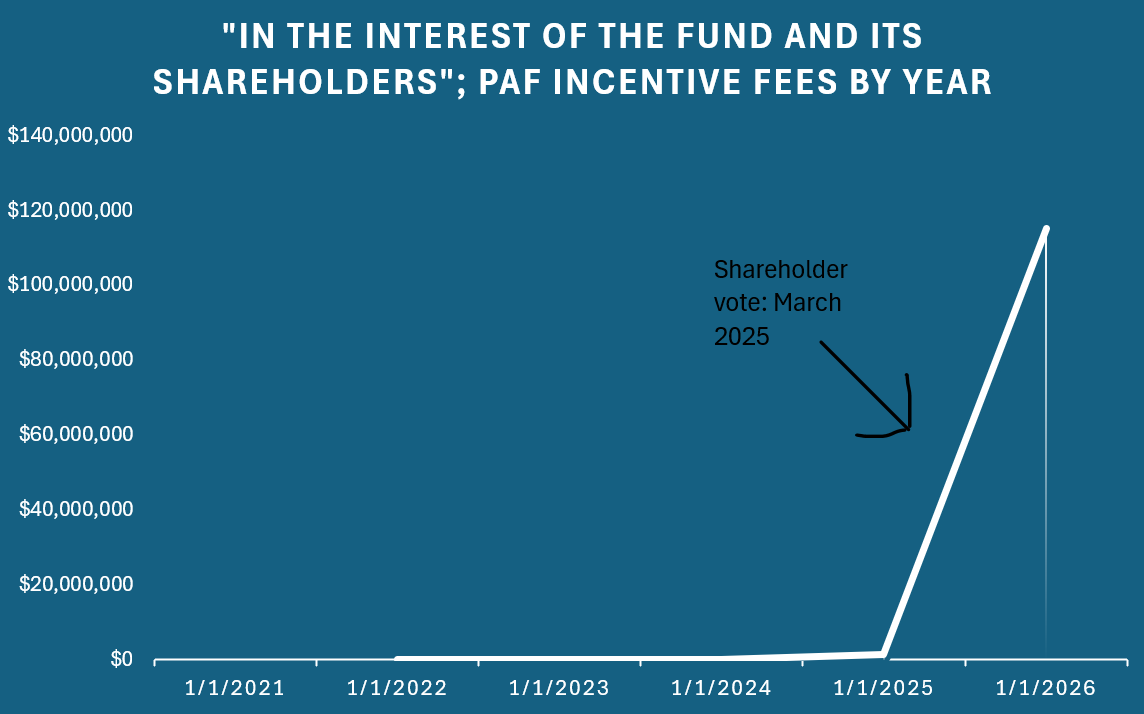
And its true, actually: the steepness of the line does not seem to do the increase justice….
We asked for confirmation/comment from Hamilton Lane on the dramatic increase in incentive fees paid, and the difficulty reconciling it with the proxy’s “investor’s best interests” language. Hamilton Lane did not respond.
There are a few offsets: as prominently featured in the PAF’s proxy, management fees were reduced by .1% per annum. Using an estimated average 2026 AUM of $4.7 billion, this would have saved investors ~$4.7 million. Yes, AltViewers, we also noticed that this number is notably smaller than $115 million.
To complete an apples-to-apples comparison, we’d need to know what inventive fee would have applied in 2026 under the pre-vote arrangement. This number cannot have been larger than ~$15 million.
The mechanics: the post-vote incentive fee is 10% of gains with no hurdle rate. Previously, a 12.5% fee was paid 1. upon the realization of a gain and 2. with an 8% hurdle rate. The requirement of a realization is the key reason why actual fees paid had been so much lower (and better for investors).
If the higher incentive fee applied to all of the 2026 fiscal year’s reported realized gains of $118 million, the incentive fee paid would have been around $15 million. We think $3 million, or twice the prior year, seems a reasonable guess. Regardless, it doesn’t change the picture; post-vote expense trends have been terrible for PAF investors.
And the trend continues: April and May 2026 fund performance, not reflected on the chart, suggests an additional incentive fee payment of ~$35 million after the June 2026 quarter-end.
Mo’ money, Mo’ problems: Crisis Strategy

Michael (Bolton): “This was all your idea, asshole!”
In Office Space, the guys recognized the problem and closed the account before it could get any bigger. So far, Hamilton Lane doesn’t seem interested in this option.
What should Hamilton Lane management do?
Let’s start with what you can’t do.
1. Sadly, the internet is forever. You can’t make the SEC filing vanish. It seems to speak on two levels: one level to get investors to yes (target audience: everyone), the other to deviously satisfy disclosure requirements (target audience: no one). Then again, maybe our government might decide we don’t need SEC filings at all (see Idiocracy, another Judge film).
The better people understand the proxy, the worse things get for Hamilton Lane. It seems challenging to show that the PAF investors are somehow better off, contradicting the proxy’s framing. So you don’t draw attention to the proxy.
2. You can’t take substantive questions about the issue in an interview. You decline interview invitations and correspond via lawyerly responses, as was the case with the FT’s Robin Wigglesworth, after he had questions. You call it ‘last year’s news’ on CNBC.
3. You can’t address the departure of the proxy filings’ overseer (and possible author), a month after the WSJ article, or the departure of his successor, last month.
What can you do? You can:
1. Hire a quality crisis management firm, like Fully Vested, to help handle yours. Maybe they can help you get a piece in Barrons….
When you host your conference call, do discuss NAV-squeezing (one-day markups) in your prepared remarks; at least you are in good company there, and it will make folks think you are addressing the elephant in the room, even if it sort of sucks to hear Marc Rowan say it “makes no sense.” Unfortunately, NAV-Squeezing was the baby elephant, this is the big Momma.
2. When asked about the PAF, you can highlight that the vote was overwhelmingly in favor (leave out the fact that 49% of shares weren’t voted), and the SEC didn’t get in the way.
How to Vote A Proxy: Pro Tips
This won’t take long, we promise.
Investors are often asked to vote on stuff. The document that describes the voting issue is called a proxy. SEC-regulated entities follow a formal process. As it turns out, one example of a voting investor is the PAF itself. Like most institutions, Hamilton Lane writes down its proxy voting guidelines.
Here is an excerpt:

We’ve never seen a proxy voting policy that prioritizes anything other than voting in the long-term economic interest of investors. It’s not that complicated.
With this in mind, contrast the PAF proxy’s language with the PAF investor experience discussed above.
Informed Consent?
In May of 2026, Hamilton Lane management suggested that PAF investors knew they’d pay some performance fees, and that they desired a lower management fee:

Hamilton Lane May 2026 Earnings Conference Call
Hmmm. Assume for a moment that a long-run annual return expectation for Private Equity in general is 8%.
The PAF’s old hurdle rate—the (deal-based) return that needed to be met before any incentive fee was paid-- was 8%[1]. And remember: until a gain was realized, no incentive fee was paid.
Post shareholder vote, this hurdle rate was eliminated. Aside from the $58 million retroactive payment, this means that prospectively if the fund returns 8%, the incentive fee paid will be 80 bps per annum (10% x 8%=.8% of assets), instead of potentially zilch.
The new math at an 8% fund return:
How does your 10bp management fee savings feel now?
New (Reduced LOL) Management Fee: 1.40%
Incentive fee expense: 0.80%
Total: 2.20%
If PAF investor-voters knew of this dynamic, then their ‘yes’ vote would seem to violate their own obligation to maximize long term economic wealth.
What’s wrong with them?
Co-CEO Hirsch also said investors were asking for this:

Source: Hamilton Lane May 2026 Earnings Conference Call
Maybe Hamilton Lane confused ‘investors, who wanted a different structure’ with the firm’s own distribution (aka sales) partners, and Hamilton Lane itself? From the proxy:

What Hamilton Lane didn’t mention: the new structure is way worse for investors. Or at least it sure has been for this fund.
In Search Of: Satisfied PAF Investors
As a financial victim, Initech did not arouse sympathy. Many PAF investors do, including:
The Peter & Carmen Lucia Buck Foundation (PCLB), which owned a stake in the PAF as of June 2025.

Source: PLCB Foundation
Founded by the late Subway founder Peter Buck and his wife Carmen Lucia, it supports many worthy causes, including charter schools. Contrast the PAF’s commercial benefits from the fund changes with the potential impact on the Bed-Stuy New Beginnings Charter School; financial support provided to the school could have been more than doubled had the fund’s changes not been approved:

Now consider the American Library Association’s Foundation. Among the ALA’s programs is a scholarship program that provides more than $300,000 annually to graduate students.
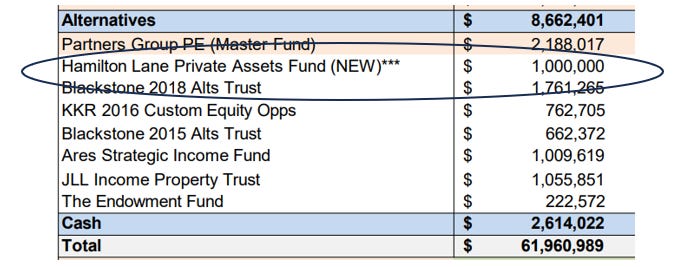
Source: American Library Association
Without the shareholder vote, an extra $20k or more could have funded another scholarship for a master’s student. We reached out to the Bhatia Group at Merrill Private Wealth Management, advisor to the ALA, but they declined to comment.
Finally, consider the Nor-easter foundation, based in Greenville, Delaware. Had more than 50% of votes gone against the PAF’s recommendation, the Foundation could have boosted its support of the Nemours Children’s hospital.


Prefer a less heart-rending example with a bigger dollar impact?
Mass Mutual was listed as a large owner (8% of institutional shares) in the proxy). The shareholder vote cost Mass Mutual millions.
Or more likely, cost Mass Mutual clients millions. These shares likely represented the aggregation of many individual investors’ holdings. As we understand it, Mass Mutual may have retained voting responsibilities for these shares. If so, Mass Mutual would have faced a dilemma when voting time came, as the proxy explains that the changes would be “beneficial from a commercial standpoint” for distributors.
We tried, like, really hard, to talk to someone at Mass Mutual to learn more. We did not succeed.
Below is a list of various investors we found, along with our estimated incremental cost from the fund’s changes through March 2026. The estimate is based on:
$115 million in cash incentive fees paid, less:
$4.7 million in savings from lower (.1% lower per annum) management fees, less:
$3 million in assumed incentive fees under the old arrangement; twice the amount of the prior year.
=$107 million.
Links to the foundation sources are below.
In a sense, these investors and their representatives now find themselves aligned with Hamilton Lane. Public scrutiny is unwelcome. The vast majority either voted for the changes or not at all.
Our inquiries to these organizations did reach Hamilton Lane via an investment manager that works on behalf of a foundation. The message, including our questions, was run up the chain, and then a response was run back down.
We think the response wasn’t supposed to be run back down the chain to the foundation in its raw form, much less to the AltView, but anyway…
Headlined “Talking Points regarding the AltView Message” it didn’t address any questions we’d asked via the foundation representative.
Instead, it offers a general defense to decision makers like the investment manager that chose to invest with the PAF on behalf of the foundation. Our guess: the same manager has also recommended the PAF for other clients.
Our favorite bit, by far: Hamilton Lane’s characterization of the AltView:
“A blogger who writes with extreme bias and lacks credentials.”
Rather than addressing the issues, Hamilton Lane instead appears to be enlisting the support of investment manager-middlemen in defense of its fund.
Instead of defending Hamilton Lane, or getting embarrassed, we suggest that these investor-middlemen take a beat, and a deep breath.
Reconciling a ‘yes’ PAF proxy vote with the objective of maximizing investor wealth is very challenging. If these voters properly understood the proxy (near-impossible in our view), they would have known that it would cost their end-clients money. If they nonetheless voted in support, they would seem to have violated their own fiduciary responsibilities.
Is this not a problem either way?
Hamilton Lane now says, more than a year after the vote, that investors supported the changes ‘despite them knowing that that was going to result in some performance fees being paid to us.’
Really? Which investors, Hamilton Lane?
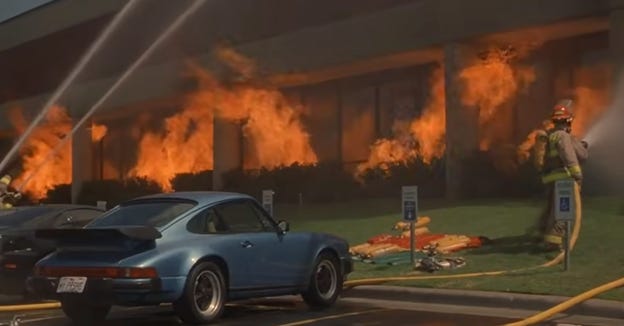
Initech, burning
Redemption…
Did you know? Do The Right Thing is not just a famous Spike Lee movie. It is also a Hamilton Lane core value.
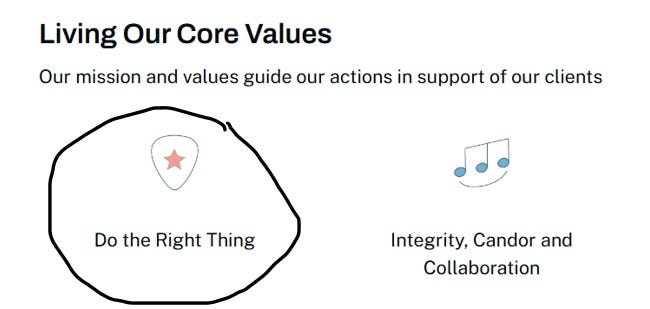
And since 2015 it is a Brooklyn street, located not far from the Bed-Stuy New Beginnings Charter School….
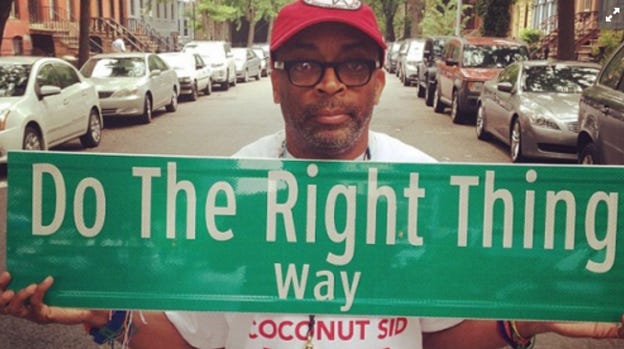
…..the school that might have received much more generous support from The Peter and Carmen Lucia Buck foundation had the PAF not managed to change its structure.
Could Hamilton Lane truly channel its core values and do the right thing? Apologize, reverse the PAF changes, and give PAF investors their money back? Aside from helping re-fund schools, scholarships, and children’s hospitals, turning off the cash machine would mean not having to worry about future profits that could also be seen as ill-gotten.
A fresh start. Leadership can go back on CNBC or Bloomberg without having to fear getting asked about “last year’s news.”
Are we optimistic? No, it would not be in our nature. But we’ve been surprised before.

Lawrence: Mustachioed, Mullet-Sporting Truth Teller
NOT INVESTMENT ADVICE. INVEST AT YOUR OWN RISK.
[1] The old hurdle rate applied on a deal-by-deal basis; it would be calculated based on the return of each investment when realized. The new approach is based on the value of the entire fund. For simplicity, this comparison assumes that every investment’s realized return is 8%. In practice, some investments would fly, and others would be duds.
Links to Foundation Data:
American Library Association Alvin H Baum Family Fund Peter and Carmen Lucia Buck Foundation Kilrea Foundation Michael & Renee Minogue Foundation Nor’Easter Foundation Steedman Family Foundation Rhett Butler Charitable Foundation Bender West Foundation
“Entirely consensual” is the standard wording from every crisis management firm worth its fees.
For the LP's "stupid is as stupid does". Is there a clawback (was DD done on GP credit risk?)? Class action possibility for beneficial owners?